LinkedIn blog and reaction to the farewell article of Kees Broere as correspondent in Africa: “Old and new knowledge in Africa”.
Revolution
Last week, Kees Broere wrote a beautiful farewell article after 18 years as a correspondent in Africa for De Volkskrant (Dutch Newspaper). In the article, he argued that African youth should break free from the power of old men. In this article, I would like to add one aspect to his story. To achieve that goal, one thing must happen: education.
Reading the article, many thoughts came to mind. First, there is recognition: during my ten-year stay in three West African countries, I often thought, “Oh people, we need a revolution!” It was only many years later that I realized that revolution is not the right answer.
Secondly, I got the feeling that Broere himself, as a correspondent and as a father, displays paternalistic traits in his article by knowing what is good for the continent. But I dismissed this value judgment, once again, both for myself and for Broere. Yes, we are all citizens of this world. And yes, we are allowed to have opinions about each other and express them, even finance them, provided that conditions such as transparency are met. As a development worker in Africa, I was pleased to see that my ‘solutions’ were not accepted if they were not appropriate. At such moments, neo-colonial paternalism turns into cooperation, and having different points of view is both enlightening and innovative. This line of thinking is also interesting in the Dutch context, where migrants (and the UN) are demanding a voice, but that is beside the point.
Back to Africa. Because more important than the above, I was suddenly struck by a feeling of powerlessness. Broere beautifully describes a fundamental aspect of the cultures on this majestic continent. And as Emeritus Professor Geert Hofstede has observed after years of research into cultures: the fundamental values of a culture generally remain quite stable.
Power distance
Geert Hofstede has examined two basic values that underlie the paternalism of African elders: power distance and short-term orientation. Power distance refers to “the extent to which the less powerful members of a society accept that power is unequally distributed.” Virtually all countries on the African continent score relatively high on this cultural dimension: the majority do indeed accept the power of the elderly, of fathers, tribal elders, and wise old men with life experience. If people are tired of a particular leader, a revolution can break out in countries that score high on this dimension. However, in such cases, the current ruler is usually replaced, while the underlying value of power distance and respect for the (new) leader remains unchanged.
Tradition
Short-term orientation concerns another cultural dimension, which “represents the pursuit of virtues focused on the past and the present, particularly respect for tradition, avoiding loss of face, and fulfilling social obligations.” In these cultures, stability is valued more highly than flexibility, and depending on the situation, traditional knowledge will therefore be chosen relatively more often than ‘newfangled’ education and scientific knowledge. As Broere also describes, it is not surprising that people fall back on tradition. The continent has experienced a relatively short but intense colonial period (compare, for example, Ghana with 59 years, Indonesia with 133 years, and Brazil with 321 years of colonial history), which destroyed the original systems or shook them to their foundations. The fact that many African people value stability highly after colonization will probably have reinforced rather than weakened the short-term focus that probably already existed.
A country’s culture is important, but even with a different value system, a country can still achieve economic development. The United States also has a relatively short-term culture, for example, while countries such as France and Belgium have a relatively high power distance. I invite you to watch the inspiring Ted Talk by the recently deceased Swedish scientist and statistician Hans Rosling, which gives examples of the great strides Africa is making with the help of modern knowledge.
Education
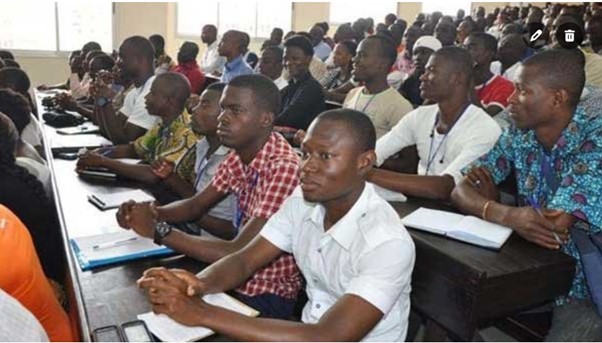
On the one hand, it is true that the basic values of a culture change only very slowly (and even then only relatively in relation to each other). On the other hand, power distance in many countries is related to the level of education received, and if young people and women need more space and want to free themselves more quickly from the paternalism of older people, as Broere describes, then broad commitment to education is the path to follow. Edna, Broere’s daughter, is a shining example of this, and there are currently many examples like her. It is a slow, creeping change, but this slow evolution is particularly evident in countries that have their education systems in order.
Refugees
Finally, if we in the Netherlands want to transform the flow of refugees into a healthy exchange, then this is really one of the keys to a longer-term solution. Focusing on education in the countries themselves and supporting highly educated people (and other entrepreneurs) in the projects they want to carry out. In addition, recognizing, understanding, and accepting cultural differences is of great importance. The rich countries in Europe have the ability to support this commitment and also have a well-understood self-interest.